

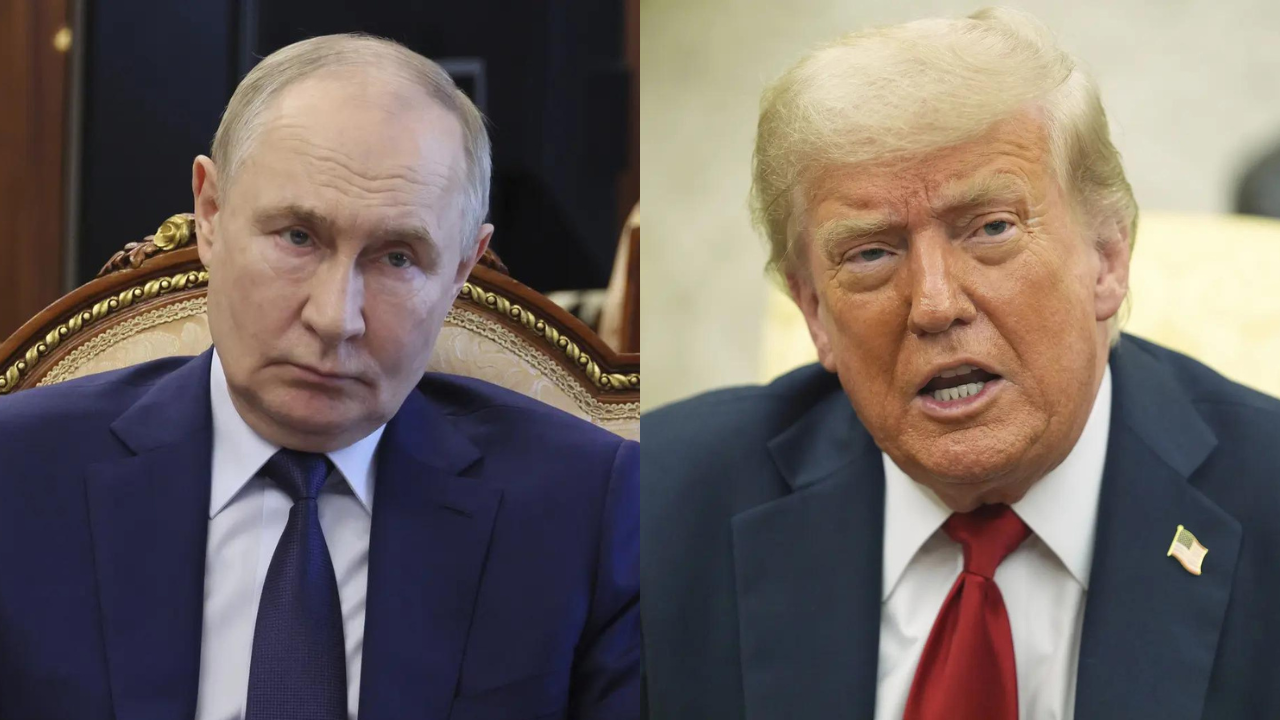
Two-Week Deadline Issued
President Donald Trump has imposed a two-week deadline on President Vladimir Putin and President Volodymyr Zelenskyy to make tangible progress toward peace regarding the Russia–Ukraine war. The ultimatum came during remarks at the White House Oval Office.
Possible U.S. Responses
Trump warned that if no progress is made, he could resort to a range of actions—including imposing “massive sanctions,” “massive tariffs,” or possibly both. At the same time, he suggested the alternative of taking no action and leaving the conflict in the hands of Russia and Ukraine, saying it might become “your fight.
Motivation and Diplomacy
Trump’s ultimatum follows a flurry of diplomacy: a summit with Putin in Alaska that yielded no ceasefire agreement, and a White House meeting with Zelenskyy and European leaders. Frustrated by the lack of progress, Trump now demands answers within two weeks before deciding whether to escalate U.S. involvement or step back.
Global Implications
The looming decision could significantly shift international dynamics. Massive sanctions or tariffs would escalate economic pressure on Russia, while doing nothing might signal passivity. The outcome of Trump’s deadline carries weight not only for regional stability, but also for U.S. foreign policy credibility.
Why This Is Significant
| Key Factor | Insight |
|---|
| Urgency and Pressure | Trump’s two-week timeline forces a sense of immediacy, pressuring both sides to commit to peace or face economic consequences. |
| Economic Leverage | The U.S. may use sanctions and tariffs as diplomatic tools, impacting both Russia and countries trading with it. |
| Ambiguous Strategy | Trump’s willingness to “do nothing” contrasts sharply with threats of harsh measures, highlighting a high-stakes gamble. |
| Diplomatic Posturing | This ultimatum comes amid failed peace efforts—reflecting both Trump’s willingness to engage and deep frustration with the impasse. |